
Call us now :08045800753
 Send Inquiry
 Send Inquiry
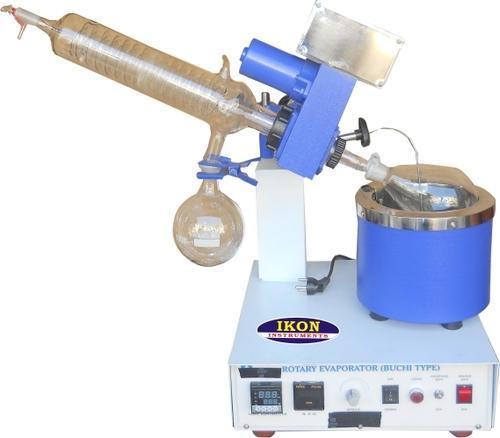
Rotary Vacuum Evaporator (Buchi Type)
Price 55000.0 INR/ Piece
MOQ : 1 Piece
Rotary Vacuum Evaporator (Buchi Type) Specification
- Features
- Adjustable speed, Automatic lifting, PTFE sealing, Overheat protection, Anti-corrosive structure
- Accuracy
- 1 C (temperature) / 2 RPM (rotation speed) C
- Heating Capacity
- Up to 1.5 kW Kilowatt (kW)
- Shape
- Vertical, Compact
- Glass Type
- Borosilicate Glass
- Power Supply
- 230V, 50Hz single phase
- Display Type
- Digital LED
- Temperature Resistance
- Up to 180 C
- Control Type
- Digital / Manual
- Speed Range
- 20 180 RPM
- Type
- Other
- Dimension (L*W*H)
- Approx. 600 mm x 400 mm x 900 mm Millimeter (mm)
- Equipment Type
- Rotary Evaporator
- Equipment Materials
- Stainless Steel frame, Borosilicate Glass parts
- Power
- 1 kW Watt (w)
- Voltage
- 220V AC Volt (v)
- Material
- Borosilicate Glass and Stainless Steel
- Application
- Laboratory solvent evaporation and distillation
- Capacity (Ltr)
- 1 to 2 Liters Liter (L)
- Cooling Surface Area
- 1200 cm (approx.)
- Rotary Motor
- Brushless DC, low noise
- Evaporation Flask
- Standard 1 L or 2 L capacity
- Vacuum Control
- Manual vacuum regulation valve
- Vacuum Seal
- PTFE, chemical-resistant
- Drain Valve
- Integrated for easy solvent removal
- Ambient Temp Range
- 5C35C
- Accessories Included
- Receiving flask, clamping set, support stand
- Bath Type
- Water/Oil bath, corrosion resistant, stainless steel
- Max Bath Temp
- Up to 99C (water) / 180C (oil)
- Lift Mechanism
- Manual/Automatic lift system
- Safety Features
- Thermal fuse, Over-temperature cut-off
- Condenser Type
- Vertical coil condenser
- Glass Joint Size
- 29/32 standard taper
- Compliance
- ISO & CE Certified
- Weight
- Approx. 2025 kg
Rotary Vacuum Evaporator (Buchi Type) Trade Information
- Minimum Order Quantity
- 1 Piece
- Payment Terms
- Cash Advance (CA), Cash in Advance (CID)
- Supply Ability
- 1000 Pieces Per Week
- Delivery Time
- 2 Week
- Sample Policy
- Contact us for information regarding our sample policy
- Main Export Market(s)
- Asia
- Main Domestic Market
- All India
About Rotary Vacuum Evaporator (Buchi Type)
Grab this exclusive Rotary Vacuum Evaporator (Buchi Type) engineered for astonishing precision in laboratory solvent evaporation and distillation. Crafted with a masterful combination of corrosion-resistant stainless steel and durable borosilicate glass, it features a vertical coil condenser, integrated drain valve, PTFE vacuum seal, and offers both manual and automatic lift mechanisms. With a monumental cooling surface area of 1200 cm, digital/manual control, and essential safety features, this unit promises high performance and efficiency. Select from standard 1 L or 2 L flasks for versatile, reliable applications.
Rotary Vacuum Evaporator: Type, Usage, and Features
The Rotary Vacuum Evaporator (Buchi Type) is ideally used for laboratory solvent evaporation and distillation. As an essential equipment, it is employed for concentrating, drying, and purifying chemicals. With features such as manual or automatic lift, adjustable speed, PTFE sealing, and overheat protection, it guarantees safety and precision. Its digital LED display and stainless-steel frame deliver reliability, while the borosilicate glass parts resist chemicals, making it suitable for various research and industrial tasks.
Rotary Vacuum Evaporator: Supply Capability and Trade Details
We maintain a robust supply ability for the Rotary Vacuum Evaporator (Buchi Type) to ensure prompt shipment of each purchase order. Clients can expect expenditure transparency with detailed quotations. Payment terms are flexible, generally including advance payments or letters of credit. Once shipped, products reach global destinations, with major export markets spanning Asia, Middle East, and Africa. Our compliance with ISO and CE standards reassures quality for every international shipment.
Rotary Vacuum Evaporator: Type, Usage, and Features
The Rotary Vacuum Evaporator (Buchi Type) is ideally used for laboratory solvent evaporation and distillation. As an essential equipment, it is employed for concentrating, drying, and purifying chemicals. With features such as manual or automatic lift, adjustable speed, PTFE sealing, and overheat protection, it guarantees safety and precision. Its digital LED display and stainless-steel frame deliver reliability, while the borosilicate glass parts resist chemicals, making it suitable for various research and industrial tasks.
Rotary Vacuum Evaporator: Supply Capability and Trade Details
We maintain a robust supply ability for the Rotary Vacuum Evaporator (Buchi Type) to ensure prompt shipment of each purchase order. Clients can expect expenditure transparency with detailed quotations. Payment terms are flexible, generally including advance payments or letters of credit. Once shipped, products reach global destinations, with major export markets spanning Asia, Middle East, and Africa. Our compliance with ISO and CE standards reassures quality for every international shipment.
FAQs of Rotary Vacuum Evaporator (Buchi Type):
Q: How does the Rotary Vacuum Evaporator (Buchi Type) facilitate solvent removal in laboratories?
A: The Rotary Vacuum Evaporator operates by heating the solvent in the evaporation flask under reduced pressure, which lowers the boiling point. This process allows for efficient and gentle removal of solvents, preserving sensitive compounds often used in chemical and biological laboratories.Q: What are the main benefits of using an exclusive Buchi Type Rotary Vacuum Evaporator?
A: The primary benefits include precise temperature and rotation control, corrosion-resistant construction, energy efficiency, and advanced safety features like thermal fuse and over-temperature cut-off. These ensure safe, consistent, and high-quality solvent evaporation.Q: When should you choose the vertical coil condenser type for rotary evaporation?
A: A vertical coil condenser is ideal for laboratories with limited space and for applications requiring efficient condensation of vapors, as it maximizes cooling without expanding the units footprint.Q: Where is the Rotary Vacuum Evaporator most commonly used?
A: This evaporator is common in research laboratories, chemical industries, pharmaceutical development, and academic institutions for processes such as distillation, concentration, solvent recovery, and sample preparation.Q: What is the process for setting up and operating the Rotary Vacuum Evaporator?
A: Begin by assembling the evaporation and receiving flasks using the standard 29/32 joint. Fill the bath with water or oil, connect the vacuum pump, and adjust vacuum and temperature settings via the digital/manual controls. Use the integrated drain valve for safe solvent removal. Always consult the user manual for detailed instructions.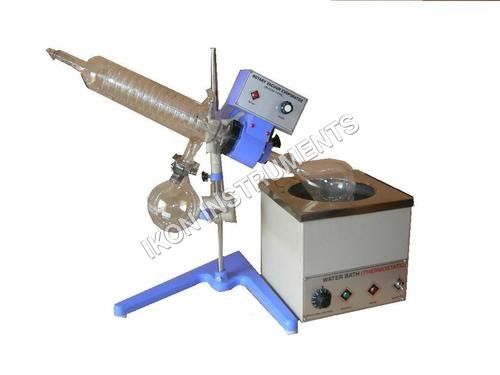
Tell us about your requirement

Price:
Quantity
Select Unit
- 50
- 100
- 200
- 250
- 500
- 1000+
Additional detail
Mobile number
Email

More Products in Vacuum Rotary Evaporator Distillations & Digestion Category
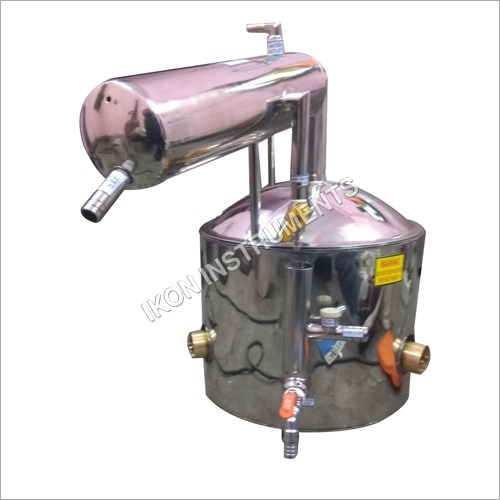
Water Still (Wall Mounting) or Table Top (Barnstead Type)
Application : Distillation and purification of water in laboratories, research, and healthcare institutions
Material : High quality Borosilicate glass, corrosion resistant metal components
Type : Other, Water Still (Wall Mounting or Table Top, Barnstead Type)
Temperature Resistance : Up to 400C
Control Type : Manual ON/OFF, optional thermostat
Equipment Type : Laboratory Water Distillation Apparatus
Distillations (All Glass)
Application : Laboratory and Industrial Purification, Solvent Distillation, Water Distillation
Material : Jacketed Borosilicate Glass
Type : Other, All Glass Distillation Unit
Temperature Resistance : Up to 250C
Control Type : Manual/ Digital PID Controller
Equipment Type : Manual or Automated Distillation Apparatus
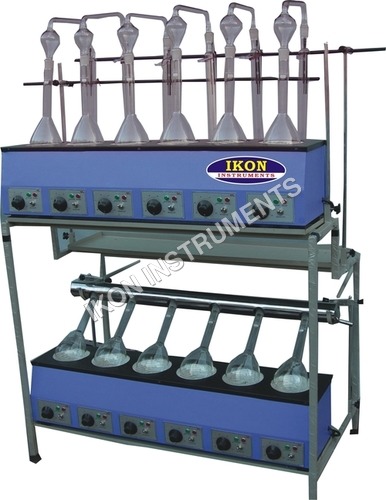
Distillation & Digestion Units
Application : Laboratory, Chemical Analysis, Food Processing, Environmental Lab
Material : Borosilicate Glass / Stainless Steel
Type : Other, Distillation & Digestion Unit
Temperature Resistance : Up to 400C
Control Type : Manual / Digital Controller
Equipment Type : Distillation & Digestion Unit
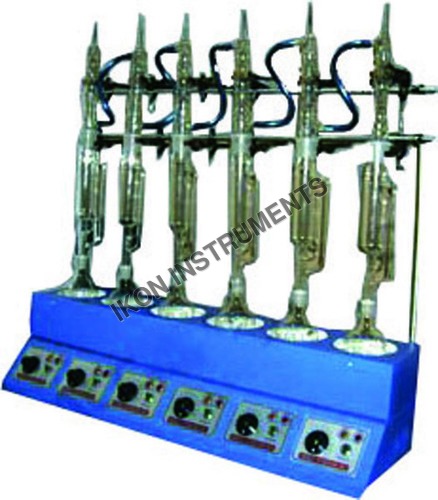
Soxhlet Extraction
Application : Continuous solvent extraction of solid materials, fat determination, analytical chemistry
Material : HighQuality Borosilicate Glass, SS clamps
Type : Other, Soxhlet Extraction Unit
Temperature Resistance : Up to 350C
Control Type : Manual/Analog or Digital (depending on model)
Equipment Type : Laboratory Extraction Equipment

Correspondence Address
C-241, Jhilmil Colony, Delhi - 110095
 Send Inquiry
Our Products
- Laboratory Equipments
- Seed Testing Equipments
- Food Processing Machine
- Pharmaceutical Machines
- Analytical Equipments
- other
- Autoclaves
- Incubators
- Water Baths
- Laboratory Cabinets, Freezers & Dryers
- Shakers, Grinders & Stirrers
- Ovens
- Furnace & Melting Point
- Refractometers, Moisture Balance & Polarimeter
- Clean Air Equipments
- Vacuum Rotary Evaporator Distillations & Digestion
- Laboratory Miscellaneous
- Moisture Meter
- Dividers
- Dryers
- Blowers
- Seed Counter
- Rice Miller
- Sample Sheller
- Miscellaneous
- Canning & Sealing Units
- Fruits/Vegetable Juices
- Dicing, Peelers & Slicers
- Paste Making Machine
- Kettles & Boilers
- Filling Machines
- Capsule Machines
- Dissolution Rate Test Equipment
- Disintegration Test Apparatus For Tablets
- Bulk Density Apparatus
- Tablet Machines
- Blenders & Mixers
- Pharmaceuticals Miscellaneous
- Analytical Equipment
- Digital Timer
- Extraction Machine


Registered Office :- C-241, Jhilmil Colony, Delhi - 110095, India

Mrs Nidhi Sharma
(Proprietor)
Mobile :08045800753
 Send Inquiry
 Send SMS
Developed and Managed by Infocom Network Private Limited.
